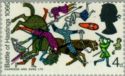
The Bayeux Tapestry is an embroidered cloth—not an actual tapestry—nearly 70 metres (230 ft) long, which depicts the events leading up to the Norman conquest of England concerning William, Duke of Normandy and Harold, Earl of Wessex, later King of England, and culminating in the Battle of Hastings. The tapestry consists of some fifty scenes embroidered on linen with coloured woollen yarns. It is likely that it was commissioned by Bishop Odo, William's half-brother, and made in England in the 1070s. In 1729 the hanging was rediscovered by scholars at a time when it was being displayed annually in Bayeux Cathedral. The tapestry is now exhibited at Musée de la Tapisserie de Bayeux in Bayeux, Normandy.
The Bayeux Tapestry is an embroidered cloth—not an actual tapestry—nearly 70 metres (230 ft) long, which depicts the events leading up to the Norman conquest of England concerning William, Duke of Normandy and Harold, Earl of Wessex, later King of England, and culminating in the Battle of Hastings. The tapestry consists of some fifty scenes embroidered on linen with coloured woollen yarns. It is likely that it was commissioned by Bishop Odo, William's half-brother, and made in England in the 1070s. In 1729 the hanging was rediscovered by scholars at a time when it was being displayed annually in Bayeux Cathedral. The tapestry is now exhibited at Musée de la Tapisserie de Bayeux in Bayeux, Normandy.